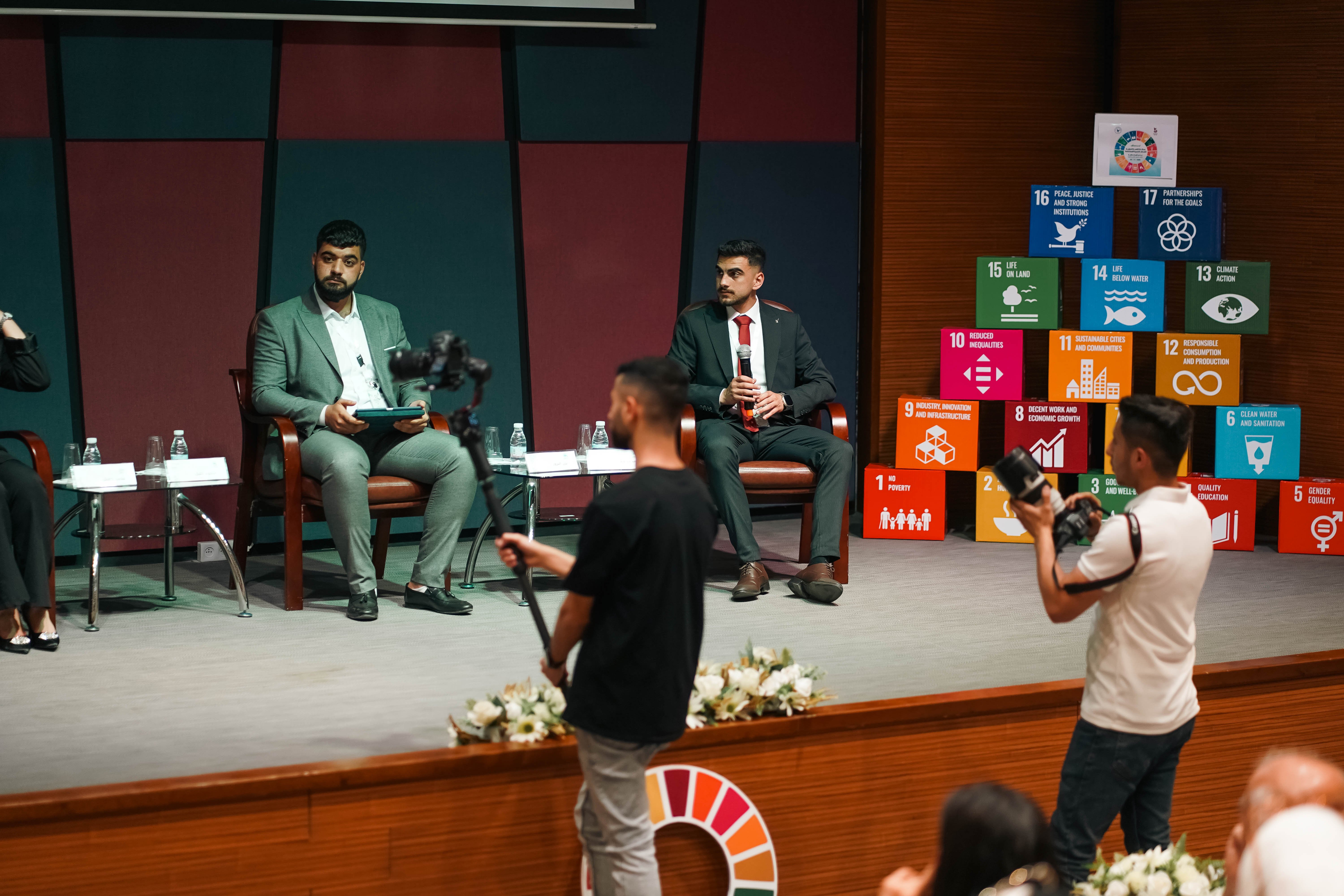
At An-Najah National University, promoting sustainability awareness is a core mission that spans education, research, and community engagement. The university implements a variety of programs and initiatives to foster knowledge and skills related to the 17 Sustainable Development Goals (SDGs). Through awareness campaigns, training workshops, on-campus events, and lifelong learning opportunities, students, faculty, and the wider community are encouraged to actively participate in sustainable practices, environmental protection, health and wellbeing initiatives, and inclusive education. These efforts aim to create an informed and responsible campus community capable of making a positive impact locally and globally.
Sustainability knowledge Test
An-Najah National University (ANNU) is dedicated to advancing sustainability and fostering sustainability knowledge and awareness across its community. To measure sustainability literacy, the university has developed a comprehensive literacy test aimed at evaluating the understanding and awareness of the 17 Sustainable Development Goals (SDGs) among students and staff. The test covers essential information about each SDG, including its definition, global prevalence, associated challenges, mitigation strategies, and underlying causes. To ensure relevance and clarity, the test is tailored into two distinct forms—one specifically for students and the other for university staff—allowing for a more accurate assessment of sustainability knowledge across different groups within the university.
Assessment Strategies for Students and Staff
Sustainability is integrated into students' academics through course assessments and the mandatory literacy test in Community Service and Sustainability (course number 11000109). also, new enrolled students receive sustainability education via orientation, workshops, and seminars. Engagement is further encouraged through volunteer projects, campaigns, and student-led initiatives.
For staff, assessment includes professional development workshops, an annual sustainability survey, and the implementation of departmental sustainability plans. Staff also contribute through interdisciplinary research, partnerships, and integrating sustainability into their teaching and curricula.
Student Evaluation Method
ANNU assesses sustainability literacy among students through a test developed by the Sustainability Steering Committee. This test covers all sustainability pillars, with a question bank ensuring unique tests for each student. The test is integrated into Moodle, where students enrolled in the "Community Service and Sustainability" course must complete it before accessing an instructional video. Their knowledge is measured before and after the video to track learning progress. Additionally, periodic assessments are conducted by sampling students to ensure continuous evaluation and improvement of sustainability knowledge.
Staff Evaluation Method
To evaluate staff, ANNU conducts sustainability literacy assessments through structured questionnaires and workshops. These assessments focus on their understanding of sustainability concepts, policy awareness, and integration into their professional roles. Staff members are encouraged to incorporate sustainability into their curricula, while staff members participate in sustainability training programs. The results help in designing targeted training sessions and policy recommendations to enhance sustainability knowledge among university employees.
Analysis and Utilization
ANNU analyzes assessment data to pinpoint strengths and identify areas for enhancement, guiding the development of focused educational initiatives and policy recommendations. This data also serves to monitor progress and assess the impact of sustainability programs, ensuring ongoing refinement and effectiveness.
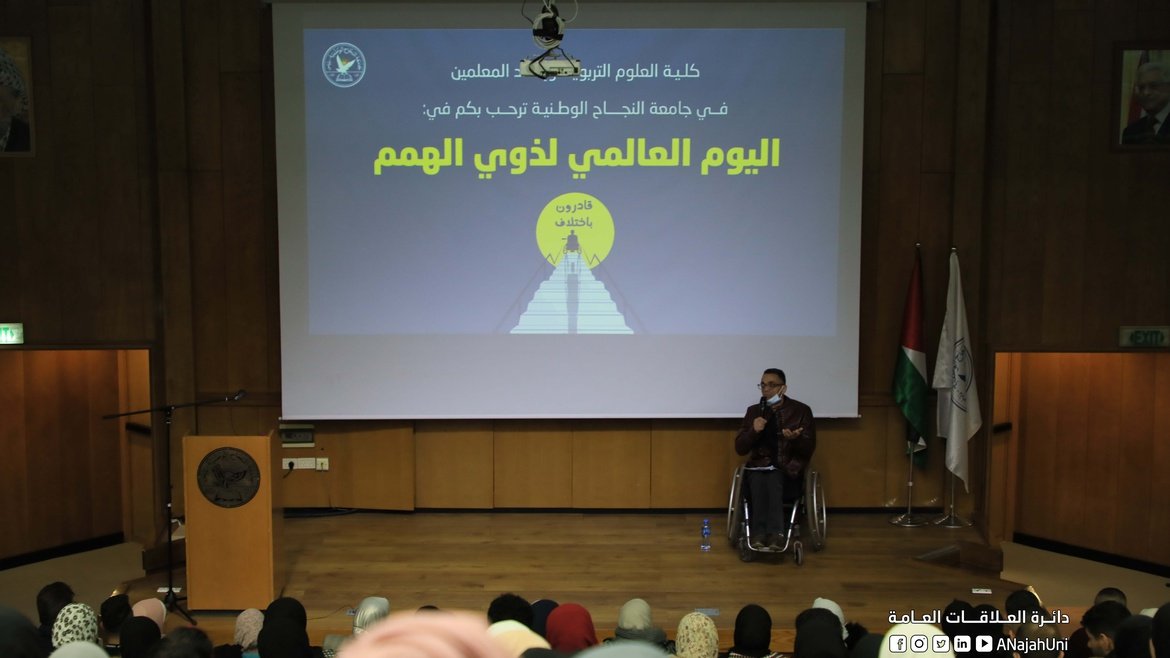
An-Najah National University is committed to fostering an inclusive environment where students, faculty, and staff with disabilities can fully participate in academic and campus life. The Disability Support Office (DSO) collaborates with students and staff to implement necessary accommodations, ensuring success in studies, work, and daily activities. Through its efforts, the university promotes accessibility and inclusivity for all.
Our Commitment
We strive to provide universal access and equal opportunities for all students, regardless of disabilities or health conditions. Committed to eliminating barriers and discrimination, we actively work with students and staff to create an inclusive, supportive learning and working environment.
Support and Accessibility Services
An-Najah offers mentoring programs, assistive technologies, counseling, and flexible learning accommodations such as extended exam times. Financial aid, scholarships, and career development programs further support students, ensuring a more accessible and inclusive university experience.
ANNU organizes workshops and training programs for students, graduates, and community members to enhance personal and professional skills:
Education & Community Engagement
An-Najah National University (ANNU) is dedicated to broadening access to education and strengthening community connections through inclusive initiatives. The university provides library resources, online courses, and public lectures to individuals beyond its student body. ANNU hosts community educational events, executive education programs, and vocational training tailored for non-university participants. Outreach efforts, including workshops, lectures, and demonstrations in local schools and communities, are often supported by student volunteers, advancing lifelong learning and social responsibility.
Health, Wellbeing, and Community Outreach
An-Najah National University is committed to enhancing the health and wellbeing of its surrounding communities through a wide range of outreach programs and workshops. These initiatives focus on mental and physical health, stress management, and healthy lifestyle practices, covering areas such as hygiene, nutrition, family planning, sports, physical activities, and healthy aging. The university also promotes sustainability in healthcare by raising awareness about reducing medical waste and encouraging healthy nutrition, aiming to build a healthier and more informed society.
Our Commitment
We strive to provide universal access and equal opportunities for all students, regardless of disabilities or health conditions. Committed to eliminating barriers and discrimination, we actively work with students and staff to create an inclusive, supportive learning and working environment.
Support and Accessibility Services
An-Najah offers mentoring programs, assistive technologies, counseling, and flexible learning accommodations such as extended exam times. Financial aid, scholarships, and career development programs further support students, ensuring a more accessible and inclusive university experience.
Training and Essential Community Services
An-Najah National University is committed to developing faculty members’ skills in e-learning and the use of modern technologies in sustainable education through training workshops designed to enhance the quality of education and ensure effective student engagement in online courses. The university also strives to ensure access to essential services for all community members through its diverse programs, providing key services in health, education, and social support to improve the quality of life for underserved populations. These initiatives include comprehensive healthcare, supportive educational programs, and community-based
ANNU organizes campus-wide events and environmental sustainability programs, combining theory with hands-on learning:
- Recycling campaigns, tree planting, campus clean-ups
- Green energy projects and resource-saving initiatives
Environmental sustainability is a pressing global challenge that demands urgent action. Our programs and courses explore clean water, land degradation, and climate action through fieldwork and problem-based learning. By combining theory with practical skills, students learn to analyze, debate, and develop solutions to real-world environmental issues.
Environmental Sustainability Programs:
- BA in Energy & Environmental Engineering
- BA in Planning Engineering and City Technology
- BA in Architectural Engineering
- BA in Civil Engineering
- BA in Agricultural Engineering
- MSc in Clean Energy Conservation Engineering
- MSc in Water & Environmental Engineering
- MSc in Environmental Sciences
- MSc in Disaster Risk Management
- MSc in Nutrition and Food Technology
- MSc in Profitable Agribusiness
- MSc in Geomatics
- MSc in Sustainability and Building Technology
- MSc in Sustainable Engineering in Production
- PhD in Sustainable Energy Technology
Example of Environmental Sustainability Courses:
Course Name | Course Description | Credit Hours |
Air Pollution Control | Covers air pollution sources, measurement techniques, and mitigation technologies. | 3 |
Environment Social Impact Assessment | Evaluates environmental and social effects of development projects, emphasizing planning and mitigation. | 3 |
Environmental Chemistry | This course applies chemistry concepts to environmental issues, focusing on air pollution, pollutant types, purification, disposal methods, pollution detection, and sample analysis. | 3 |
Environ't Planning & Impact Analysis | Focuses on environmental assessment, air and water quality, and sustainable urban planning. | 3 |
Air Pollution | Examines air pollutants, their impact, regulatory frameworks, dispersion modeling, and mitigation strategies through case studies. | 3 |
Buildings and Climate Change Mitigation | Explores passive design, emission reduction, and sustainable building practices. | 3 |
Chemical Pollution & Industrial Saftey | Addresses chemical and radiological pollutants, monitoring techniques, and industrial safety measures. | 3 |
Climate Change Mitigation for Buildings | Addresses energy-efficient buildings, renewable integration, and climate resilience strategies. | 3 |
Climate Change Risk Mitigration and Adaption | Covers climate change science, risk assessment, adaptation strategies, renewable energy, and extreme weather impacts. | 3 |
Climatology | Explores climatic models, climate classification, and applied research in climate science. | 3 |
Coastal Management | Explores marine ecosystems, pollution risks, resource conservation, and legal frameworks. | 3 |
Ecology | Introduces ecological principles, ecosystem interdependencies, and environmental sustainability. | 2 |
Energy & Environment | Explores energy generation’s environmental impact and sustainable energy solutions. | 3 |
Enviromental Chemistry | Examines chemistry in natural and polluted environments, focusing on air, water, and soil contamination and treatment. | 3 |
Environment Impact Assessment | Introduces EIA processes, regulations, and methods for assessing development projects. | 3 |
Environment Preservation | Examines human-environment interactions, pollution, resource depletion, and sustainable solutions. | 3 |
Environmental Engineering | Covers pollutants, their control, and prevention. Topics include environmental chemistry, microbiology, water purification, wastewater treatment, and air pollution management. | 3 |
Environmental Impact Assesment | Introduces EIA principles, assessing environmental impacts of projects, policies, and energy systems, with hands-on case studies. | 3 |
Environmental Law | Covers regulations for pollution control, environmental protection, and sustainability policies. | 3 |
Environmental Legislations & Town Planning Law | Discusses environmental laws, pollution control, water management, and urban planning regulations. | 3 |
Environmental Science | Examines human-environment relationships, pollution impacts, and policy-driven environmental solutions. | 3 |
Indoor Environmental Quality | Studies pollutants in indoor spaces, ventilation, air quality control, and health impacts. | 3 |
Industrial Pollution Control | Analyzes industrial waste treatment for petrochemicals, energy production, and manufacturing industries. | 3 |
Introduction to Environmental Design | Explores environmental design across architecture, urban planning, and sustainability disciplines. | 2 |
Microclimate and Environmental Design | Analyzes how urban environments affect climate and how design can enhance sustainability. | 3 |
Pollution and Risk Management | Covers pollution sources, monitoring, purification, and safety measures for hazardous chemicals. | 3 |
Principles of Climate | Studies climatology, meteorology, and atmospheric influences on environmental conditions. | 3 |
Solid Wastes Processing | Covers waste sources, composition, handling (collection, storage, transportation), and disposal methods, including recycling, incineration, and landfills. | 3 |
Sustainable Architecture | Focuses on passive design, renewable energy, green materials, and energy-efficient building techniques. | 3 |
Sustainable Waste Management and Disposal | Focuses on circular economy waste management, emphasizing reduction, recycling, and energy recovery. | 3 |
Urban Environment Management | Studies urban sustainability, disaster resilience, land use conflicts, and environmental quality in cities. | 3 |
Waste Management | Examines solid waste generation, collection, sorting, recycling, and disposal methods. | 3 |
Water and Waste Water Treatment | Explores water sources, treatment processes (coagulation, filtration, disinfection, desalination), and advanced purification techniques. | 3 |
Water Treatment Chemistry | Explores chemical processes in water treatment, focusing on purification and quality management. | 3 |
Supporting Gaza’s Students and Universities: A Collaborative Initiative
In a joint efforts An-Najah National University with UNIMED – Mediterranean Universities Union and the Palestinian Student Scholarship Fund (PSSF) to launch the Technical Educational Support for Higher Education Students Initiative (TESI). This initiative aims to empower Gaza students to complete their university education remotely as visiting students for a limited period, with no financial burden on the students or their respective universities. For more
Scientific Centers
At An-Najah National University, scientific centers, including their various units and projects, play a pivotal role in organizing programs aimed at improving access to community-based basic services across multiple sectors. Through specialized research and development initiatives, these centers address critical needs in water, energy, and health, particularly in rural and underserved areas. For instance, the Water Resources Research Center offers practical solutions and guidance on sustainable water management, equipping local communities with the skills and knowledge needed to enhance their water access and quality. Similarly, the Energy Research Unit focuses on innovative approaches to energy efficiency and renewable energy, targeting underserved regions. In the realm of health, the Medical and Health Sciences Center provides programs that enhance healthcare delivery and accessibility in remote areas, integrating community-based approaches to ensure equitable access to essential health services. These efforts reflect a commitment to leveraging academic research and practical solutions to bridge gaps in service provision, ensuring a tangible and positive impact on communities.
Health Services
Awareness and Outreach
- Community Outreach Services
- Community Outreach Nursing Students Visit Local School
- Community Nursing and Public Health Initiative
- Awareness Activity at Thakur Al Askari School
- Awareness and Investigation Activity in Local School
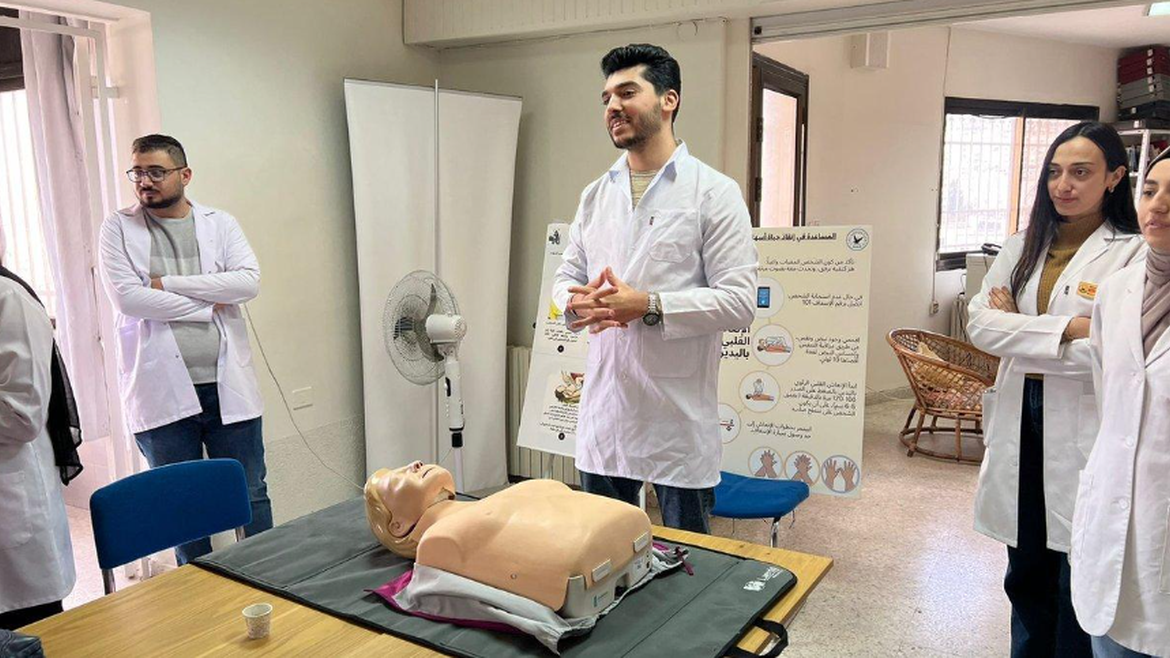
- Community Medicine Department Hosts Workshop on First Aid
- Awareness Workshop on First Aid for Choking and Other Emergencies
- Awareness Activity at Askar Al-Jadid School
- Training Grant in Field of Stability and Medical Assessment
- Students of Physical Therapy Visit Elderly Home
- Activities for the Audiology and Speech Department
- Medical Students Association Launches Annual Blood Donation Campaign
- Al-Amal Rehabilitation Hospital Receives Assistive Medical Equipment
- Audiology and Speech Sciences Students Perform Exams for Older Adults
- Nursing Event on Coronavirus Education
- Early Breast Examination Awareness
- Medical Social Students Organize Awareness Activity
- Ophthalmology Students Offer Free Vision Screening
- Entertainment Activity at Elderly Home
- Agricultural Faculty Participates in Healthy Generations Program
- Nutrition and Food Processing Department Organizes Nutritional Activity
- National Nutrition Month
- Najah Celebrates National Nutrition Month
- Home Safety Workshop