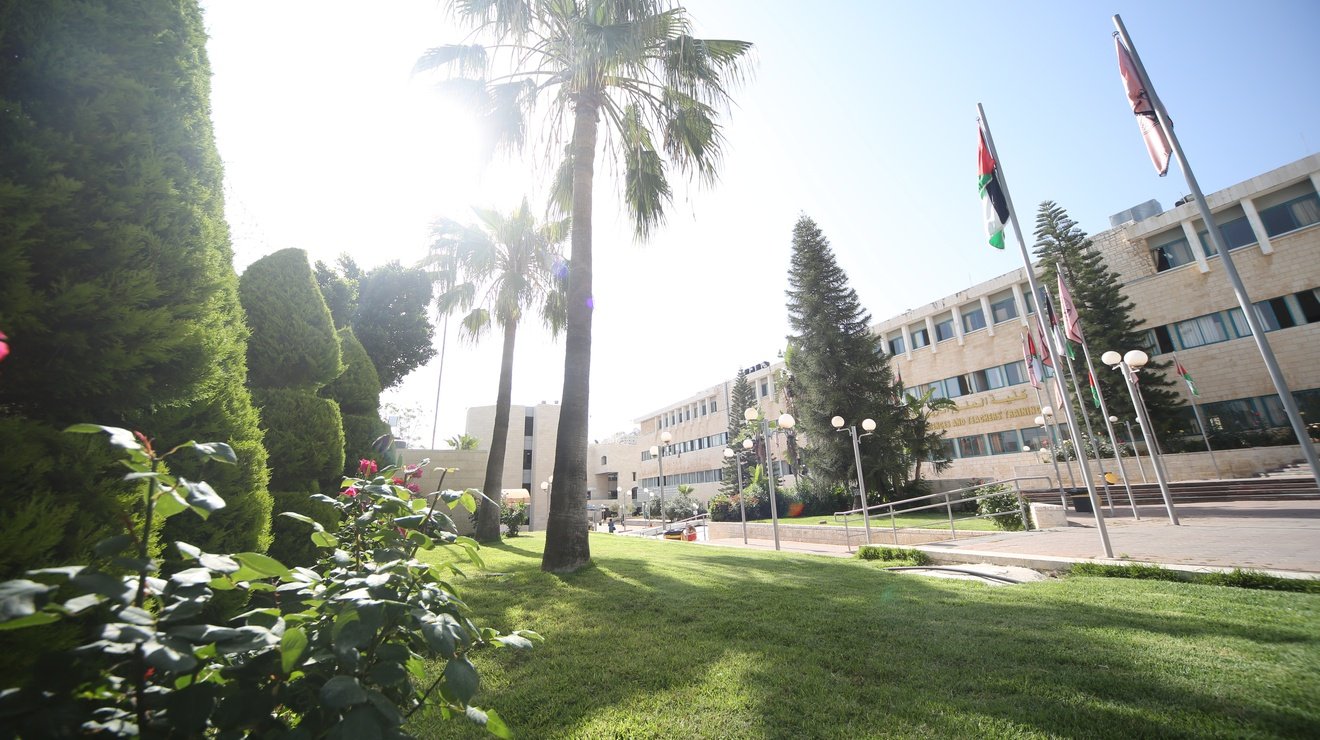
University Governance and Structure
Based on its vision "We Challenge the Present to Shape the Future", An-Najah’s governance carries a burden as it works hard under the difficult political circumstances to accomplish its objectives and aspirations.
Vice Presidents and Assistants
Partnerships and Global Initiatives Office
Governing Bodies
Shared Governance and Elected Representation
An-Najah National University is governed through a layered system of governing bodies: the Board of Trustees (the highest governing body), the University President, the University Council, the Council of Deans, and the Faculty Councils. The University is committed to shared governance, transparency and inclusiveness, and ensures that the voices of its students, faculty and staff are formally represented in institutional decision-making.
Elected representation of students, faculty and staff
As a body, An-Najah National University guarantees elected representation from students (both undergraduate and graduate), faculty and staff (non-faculty employees) in its governing councils. In each council of the University, at least one elected member from the students and at least one elected member from the staff is included as a voting member, in addition to elected faculty representatives.
-
Students (undergraduate and graduate): student representatives are elected by the student body through the annual Student Council elections, which are held by direct, secret ballot. Representation covers both undergraduate and graduate students.
-
Faculty: faculty representatives are elected by the academic staff; for example, each Faculty Council includes two faculty members (at least at the rank of assistant professor) elected annually by the faculty staff.
-
Staff (non-faculty employees): staff representatives are elected by the University’s administrative employees through their elected Employees’ Union.
Composition of the Board of Trustees
The Board of Trustees is the highest governing body of the University. Its members are appointed: some members are appointed ex officio (by virtue of their position), and others are elected from the local community, bringing the perspectives of business, academia, the professions and civil society to the University’s strategic oversight. The Chair, Vice-Chair and Secretary of the Board are elected by the members of the Board from among themselves.
The views of students, faculty and staff reach the Board of Trustees through the University President and through the recommendations of the University Council and the Council of Deans, in which these groups have elected representatives.